Stop Wasting Money on Google Maps Ads That Local Customers Ignore
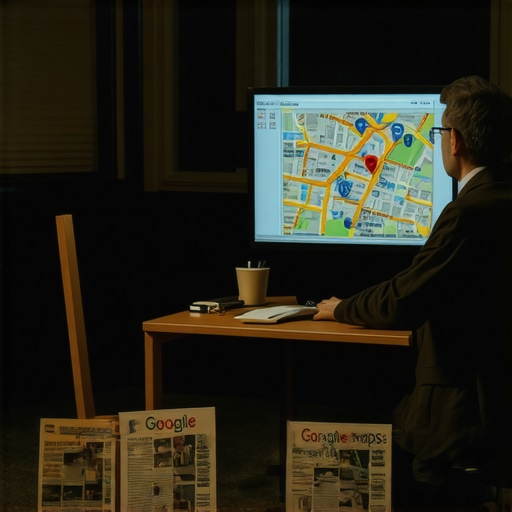
For years, the “easy” button for local business owners has been simple: if you aren’t showing up on the map, just pay Google to put you there. You see the “Sponsored” tag, you set a daily budget, and you wait for the phone to ring. But as we move into 2026, the data is telling a different story – one that should terrify any business owner relying solely on paid placements. Local customers are increasingly ignoring these ads, suffering from a phenomenon known as “ad blindness” that has shifted from desktop search results directly into the palm of their hands via Google Maps.
The truth is that while businesses throw thousands of dollars into the Google Ads furnace, savvy users are intentionally scrolling past those first few results. Why? Because they know those positions were bought, not earned. Kevin Pauls, a recognized Google Business Profile Product Expert, has long advocated for a shift in perspective. According to Pauls, businesses must stop treating Google Maps as an ad platform and start treating it as digital infrastructure. To win the local market today, you don’t need a bigger ad budget; you need comprehensive google business profile seo.
The Psychology of the Map Pack: Why “Sponsored” Doesn’t Mean “Selected”
Understanding why your ads are failing requires looking at the psychology of the modern consumer. In the early days of mobile search, users were often confused by ads, clicking on the first thing they saw. Today, the average user is digitally literate and instinctively skeptical. If you look at discussions on platforms like Reddit (specifically r/GoogleMaps), you’ll find a growing chorus of users describing “Sponsored” pins as intrusive, sneaky, and even untrustworthy. Some tech-savvy users have even gone as far as seeking “patches” or ad-blockers specifically designed to scrub these pins from their interface.
The core issue here is trust. When a user sees a business in the organic “Top 3” Map Pack, they view it as a “vote of confidence” from Google’s algorithm. They assume that Google has vetted this business for relevance, proximity, and reputation. When they see a “Sponsored” tag, that trust evaporates. They know the business is there because they had the highest bid, not necessarily because they provide the best service. To truly rank higher on google maps, you must earn that organic spot, which serves as a permanent digital asset rather than a temporary, paid-for lease.
Furthermore, the visual hierarchy of the Map Pack has changed. Google has experimented with different colors and fonts for the “Sponsored” label, but users have adapted. We are now in an era where the second or third organic result often receives more clicks than the top-placed ad simply because it feels more authentic. In the local service industry – where trust is the primary currency – appearing desperate for clicks can actually hurt your brand perception.
The 2026 Data: Organic CTR vs. Paid Clicks
If the psychological argument doesn’t convince you, the hard data will. According to First Page Sage’s 2026 research on local search behavior, the Click-Through Rate (CTR) for organic Map Pack positions has reached a staggering high compared to their paid counterparts. While a well-optimized Facebook ad case study might show a 19% CTR for specific demographics, the long-term ROI of google business profile optimization consistently dwarfs these temporary spikes.
In 2026, the average CTR for the #1 organic spot in the local map pack is nearly 40%, whereas the “Sponsored” pin above it often struggles to break 5-7%. This disparity exists because users are looking for local validation. They want to see the “Years in Business” tag, the high star rating, and the “Recently Asked” questions that only appear prominently on organic listings. When you pay for an ad, Google often strips away some of these rich snippets to make room for the ad copy, ironically making your business look less established than the organic competitors below you.
Moreover, the cost-per-click (CPC) in competitive local niches – like personal injury law, emergency plumbing, or HVAC – has skyrocketed. Businesses are often paying $50, $100, or even $200 for a single click that may not even result in a lead. Conversely, investing in local seo tools and organic strategies allows you to capture that same traffic for a fraction of the cost over time. The “cost” of organic SEO is front-loaded in effort and strategy, but once you achieve those rankings, every click is essentially free.
Why Local SEO is Infrastructure, Not Just Marketing
Rashid Rehman, a veteran in the digital space, famously stated: “Local SEO isn’t marketing. It’s infrastructure.” This philosophy is the cornerstone of successful local businesses in 2026. If you view your Google Business Profile (GBP) as a marketing campaign, you’ll stop investing the moment you don’t see an immediate return. If you view it as infrastructure, you understand that you are building equity.
Think of Google Maps ads like renting a house. You pay every month to stay there. The moment you stop paying, you’re out on the street. You have zero equity, and you’ve gained nothing for your future. Organic efforts to rank google business profile listings are like building a home you own. Every review you get, every high-quality photo you upload, and every local citation you build is a brick in that foundation. Over time, this infrastructure becomes so strong that even if you stopped “working” on it for a month, it would continue to generate leads and phone calls.
Google’s algorithm for organic rankings relies on three pillars: Proximity, Relevance, and Prominence. Ads only bypass these pillars temporarily. By focusing on organic google maps ranking service strategies, you are aligning your business with exactly what Google wants to show its users. This alignment creates a virtuous cycle: higher rankings lead to more clicks, more clicks lead to more reviews, and more reviews lead to even higher rankings.
5 Reasons Your Current Google Maps Strategy is Failing
If you’re spending money on ads but not seeing the organic growth you expect, it’s likely because your profile is fundamentally broken. Here are five common reasons why local businesses fail to gain traction:
- Category Errors: This is the most common mistake. Businesses often choose a primary category that is too broad or, worse, slightly incorrect. If you are a “Personal Injury Lawyer” but your primary category is just “Lawyer,” you will lose to competitors who are more specific.
- Review Ghosting: Many businesses have a google review strategy that consists of “hope.” They hope people leave reviews. In 2026, you need an active system to solicit, respond to, and leverage reviews to signal to Google that you are an active, trustworthy business.
- Ad Blindness: As discussed, users are skipping your “Sponsored” label. If your only presence is the ad, you are invisible to the 70% of users who refuse to click on ads.
- Poor Data (NAP Inconsistency): If your Name, Address, and Phone number are different on your website than they are on your GBP or your Yelp profile, Google gets confused. In the world of local search, confusion equals lower rankings.
- Invisible Pins (The Proximity Shift): Have you ever wondered Why Your Google Business Fort Wayne Shop Is Losing Calls? It’s often due to the “Proximity Shift.” If your profile isn’t optimized for “Prominence,” your pin will literally disappear from search results the moment a user moves two blocks away from your physical location.
To fix these issues, you need to look at Why Your Fort Wayne Map Listing Gets Views But Zero New Customers and address the underlying conversion blockers. It’s not just about being seen; it’s about being chosen.
The 2026 Shift: Video Pins and AI Search Lab Tests
The landscape of local search optimization is currently undergoing its most significant shift since the introduction of the smartphone. Google is heavily integrating its “Search Generative Experience” (SGE) into Maps. This means that instead of just seeing a list of businesses, users are seeing AI-generated summaries that explain *why* a business is the best choice for them.
To stay ahead, google maps seo now requires more than just keywords. You need high-quality video uploads. Google is testing “Video Pins” that play short, muted clips of the business interior or services directly in the map interface. If your profile only has static photos from 2019, you are already behind. AI-friendly descriptions are also vital; your business description needs to be written in a way that AI LLMs (Large Language Models) can easily parse and recommend to users asking complex questions like, “Where is the best place for a quiet business lunch with vegan options in downtown Fort Wayne?”
Preparing for these changes is essential. You should check out our guide on How to Prepare Your Indiana Business for the 2026 Google Maps SEO Changes to ensure your infrastructure is ready for the AI-driven future.
How to Transition from Paid Ads to Organic Dominance
Stopping your ads “cold turkey” can be scary, especially if they are currently your only source of leads. The transition should be a strategic shift of funds. Start by taking 20% of your ad budget and reinvesting it into a google business profile audit tool and high-quality local seo services.
Here is a step-by-step transition plan:
- Perform an Audit: Use professional local seo software like SEO Viper to identify exactly where your profile is leaking authority.
- Clean Your Data: Ensure your NAP is identical across the web. Focus on citation building services that target local Indiana directories, not just the big national ones.
- Optimize for Conversion: Update your photos, add your products/services to the GBP editor, and implement a robust google review strategy.
- Monitor and Adjust: Use 3 Google Business Insights That Reveal Exactly Why Your Phone Isn’t Ringing to track your progress. As your organic rankings rise, you can slowly decrease your ad spend.
By focusing on how to rank higher on google maps through merit rather than money, you build a resilient business that isn’t dependent on Google’s fluctuating ad prices. You should also look into 5 SEO Indiana Tactics That Outperform Paid Ads in 2026 for more localized strategies.
Conclusion: Build Your Foundation Today
While Google Maps ads might offer a temporary band-aid for a lack of visibility, they are not a sustainable growth strategy for 2026 and beyond. The “Top 3 Map Pack” is the most valuable real estate in the digital world for local businesses, and it cannot be bought – it must be earned. By focusing on google business profile seo, you are investing in the long-term health and authority of your brand.
Stop the budget bleed today. Perform a comprehensive google business profile audit and see where you truly stand. Whether you choose to do the heavy lifting yourself using local seo software like SEO Viper or you want to work with a professional like Kevin Pauls to craft a bespoke strategy, the time to move is now. The businesses that dominate the organic rankings in 2026 will be those that started building their infrastructure today.