Why Over-Optimizing Your Service Areas Is Actually Killing Your Fort Wayne Map Presence
You’ve done everything the “gurus” told you to do. You claimed your Google Business Profile (GBP), you added a few photos of your latest job site in Aboite, and you checked off every single suburb and small town within a 50-mile radius of the Allen County Courthouse. You figured that by telling Google you serve everyone from Columbia City to Woodburn, you’d be the first person they’d call.
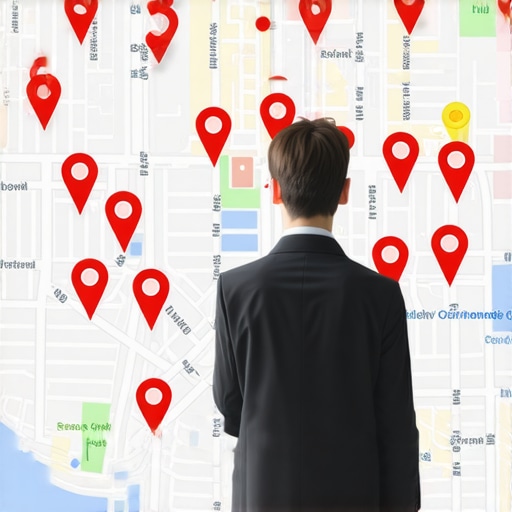
But the phone isn’t ringing. In fact, your visibility has plummeted. You’ve fallen victim to the Fort Wayne Map Pack Paradox: the wider you cast your net, the more holes you tear in it.
Section 1: The Fort Wayne Map Pack Paradox
In the world of google business profile seo, there is a fundamental law that many local business owners ignore: Proximity Relevance. Many Fort Wayne contractors and service providers try to claim the entire 260 area code, thinking “more is better.” They check boxes for every township and zip code they can find.
The reality? Google’s algorithm isn’t looking for who claims to serve the most people; it’s looking for who is the most relevant and prominent in a specific, localized area. When you tell Google you serve a massive, sprawling radius without the data to back it up, you dilute your “local authority.” Instead of being the #1 plumber in ‘07 or the go-to roofer in ‘04, you become the “nowhere” business that ranks on page four for everyone.
Research from Rio SEO suggests that “Technical SEO is often the most overlooked part” of Google Business Profile management. Business owners focus on reviews (which are important) but ignore the technical structure of their service areas. If your profile is a mess of conflicting geographic signals, you might find that Why Your Google Business Fort Wayne Pin Is Invisible to Local Customers is a reality you’re living every day.
Section 2: The Difference Between a Storefront and a Service Area Business (SAB)
One of the biggest mistakes I see in the Fort Wayne market is a fundamental misunderstanding of how Google treats physical locations versus service areas. If you are a dentist on Jefferson Blvd or a lawyer downtown, you have a storefront. Customers come to you. However, if you are an HVAC tech, a landscaper, or a mobile detailer, you are likely a Service Area Business (SAB).
Google is incredibly strict about this distinction. According to Google Support’s official guidelines, “Leaving a visible address when customers cannot visit you can… increase the risk of suspension.” If you operate out of your home in Blackhawk or a small office that isn’t staffed during business hours, you must hide your address and strictly define your service areas.
Failing to do this doesn’t just hurt your rankings; it puts you in the crosshairs for a hard suspension. Proper google business profile optimization requires honesty about your physical presence. If you don’t have a sign out front and a receptionist at the desk, clear that address and focus on your service areas instead. This technical nuance is one of the “8 Google Business Profile mistakes” that frequently leads to mismatched NAP (Name, Address, Phone) data and a total loss of trust from the algorithm.
Section 3: Why “Radius” Settings are a 2026 Ranking Killer
Back in the day, you could just set a “20-mile radius” around Fort Wayne and call it a day. In 2026, that strategy is a relic. Google’s algorithm has evolved to prefer specific geographic boundaries – think city names and zip codes – rather than a vague circle on a map.
When you use a radius, you are essentially telling Google, “I’m equally relevant in the middle of a cornfield in New Haven as I am in the heart of Huntertown.” Google knows that isn’t true. The “proximity, relevance, prominence” framework relies on specific signals. If you want to rank higher on google maps, you need to name the places where you actually do business.
Instead of a 30-mile radius, you should be targeting specific hubs like Leo-Cedarville, Grabill, or specific neighborhoods within Fort Wayne like West Central or Northside. By being specific, you provide Google with “hard” data points. If you are struggling to gain traction in these specific pockets, you may need to look at 5 Service Area SEO Indiana Fixes to Win More ZIP Codes [2026] to realign your strategy with how the search engine actually parses Indiana geography.
Section 4: The Over-Optimization Trap: Suspensions and Shadowbans
There is a fine line between being thorough and being “greedy.” I see it all the time: a Fort Wayne business owner adds 20 or 25 different service areas to their profile, hoping to catch every possible search. To Google’s AI filters, this looks like spam. It looks like you are trying to “game” the system to appear in places where you don’t actually have a physical or operational footprint.
This “over-optimization” often leads to what we call the “Invisible Bug” or a shadowban. Your profile says it’s “Live,” but when you search for your services, you are nowhere to be found. This is often because Google has flagged your service area list as “unrealistic.”
Using local seo tools is essential here to monitor if your changes are actually helping or if you’ve triggered a filter. LinkedIn research has shown that while 1% of businesses optimize their profile correctly within 28 days, others can spend 6 months or more wondering why their rankings have flatlined. Don’t let your business be the one that gets stuck. This is often Why Cheap Local SEO Services Often Result in a Shadowbanned Map Pin – they use automated scripts to bulk-add service areas, which is a massive red flag for Google.
Section 5: The “Hyper-Local” Solution: How to Prune for Profit
If your Map presence is dying, it’s time to prune. You need to stop trying to be everything to everyone and start being the authority in your most profitable neighborhoods. Here is the actionable path to fixing your profile:
- Limit Your Service Areas: Reduce your list to 5-10 areas where you actually have “geographic authority.” How do you know? Look at your reviews. If all your customers are in Southwest Fort Wayne, stop trying to rank in Decatur until you have a reason to be there.
- Match Your Website: Your GBP service areas must match your website’s “City Pages.” If you claim to serve Huntertown on your Google profile but don’t have a single mention of Huntertown on your site, Google will see the disconnect.
- Use Data-Driven Tracking: Utilize a google maps rank tracker to see exactly where your pin is visible. You might find that you are dominant in 46802 but completely invisible in 46815. Adjust your service areas based on this data, not on guesswork.
Service area businesses (SABs) struggle because there is no “obvious location pin” for search engines to latch onto (as noted by Search Engine Journal/Ewizer). You have to create that “pin” through consistent data across your profile and your website. I’ve seen How a Tiny Change to Service Areas Stopped a Fort Wayne Phone Slump simply by removing irrelevant towns and focusing on the core areas where the business was already popular.
If you need professional help executing this, looking into a google maps ranking service can provide the technical precision needed to navigate these algorithm updates without getting suspended.
Section 6: Competitive Awareness: Outranking the “Big Brands” in Fort Wayne
You might think you can’t compete with the national franchises that have massive marketing budgets. But here’s a secret: those big brands are often terrible at local SEO. They use broad, generic service area settings because their corporate marketing teams don’t understand the nuances of the Fort Wayne market.
As a local owner, you have the home-field advantage. You can win by being more “Fort Wayne-centric.” Use specific neighborhood names like “Waynedale,” “Aboite,” or “The 05” in your google business profile optimization and your regular posts. When you post an update about a job you did near Foster Park, mention the park! Google’s AI is smart enough to associate those hyper-local landmarks with your business relevance.
This is The Secret to Outranking National Chains in Indiana Map Results. They are playing a game of scale; you are playing a game of precision. Precision always wins in the Map Pack.
Section 7: Conclusion & The 2026 Outlook
Google Maps is no longer a “set it and forget it” platform. In 2026, the algorithm is more sensitive than ever to signals of spam and over-optimization. If you’ve been “greedy” with your service areas, you aren’t helping your business – you’re hiding it.
Prune your areas, align your website, and focus on where your customers actually live. If you aren’t sure where you stand, it’s time for a professional google business profile seo audit. You can use local seo software to monitor your progress, or reach out to me, Demian Poll, for a personalized strategy to dominate the Fort Wayne market. Let’s get your phone ringing again by making your Map presence as sharp and localized as possible.